Top-rated brushless impact driver for professional use: beginners start here
Whether you are building decks or fitting roofing screws, a brushless impact driver save time and strain. This simple guide explains what they are, how they differ from drills, how to choose, and how to use them like a pro. This guide is for beginners, new to the industry, but could be helpful to even the more seasoned tradies.
What is a brushless impact driver?
A brushless impact driver is a compact tool that delivers high, pulsing torque to drive screws and bolts. Brushless motors use electronics instead of carbon brushes, which reduces friction. As a result, you get better run time, cooler operation and less wear. The impact action also cuts wrist twist compared with a drill.
Brushless vs brushed: the clear gains
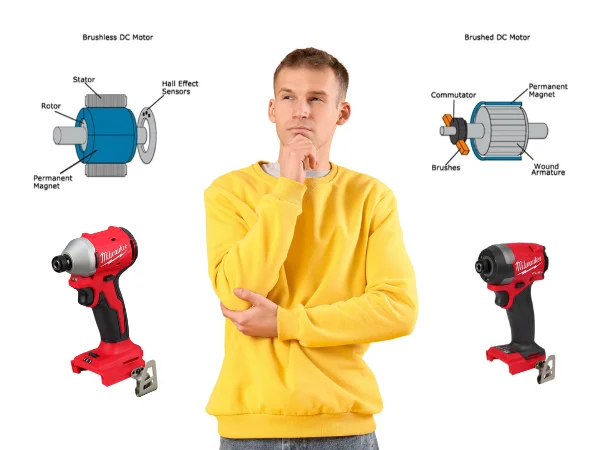
Brushless motors adjust power to the load. They run efficiently, stay cooler and last longer. You will also avoid brush changes. While the purchase price is higher, the total cost over years of work is lower. That is why most trade users move to brushless.
Key features that matter on site
- Torque and speed: Match your largest fixings and materials.
- Impact rate (IPM): Higher IPM speeds up tough driving.
- Assist modes: Start assist, self-tapper and stop modes prevent damage.
- Trigger and control: A smooth trigger and clear mode buttons improve accuracy.
- Weight and balance: Lighter tools reduce fatigue, especially overhead.
- Anvil and bit fit: A tight ¼” hex reduces wobble and cam-out.
- Battery platform: Choose a system that supports your wider kit.
- Warranty and service: Check local support and spares.
Did you know, Geographe Timber & Hardware are your local service agent or depo for all major brands… Learn more here: 7 Signs You’re Due for Power Tool Repairs
How to choose the right driver (step-by-step)
- List common jobs: Sizes, materials and screw types you use most.
- Set a torque range: Pick a tool that covers your biggest fixing with headroom.
- Check assist modes: If you use self-tappers, insist on a matching mode.
- Hold it with a battery: Balance in hand matters more than spec sheets.
- Plan batteries and charger: Two batteries and a fast charger keep you working.
- Think platform: Staying on one battery family saves money over time.
- Confirm service: Ask about parts, turnaround and warranty terms.
Quick definitions for beginners
- Torque (Nm): Turning force. Higher values drive tougher fixings.
- IPM: Impacts per minute. A higher rate speeds progress in hard materials.
- Brushless: Motor design that reduces friction for longer life and run time.
- Anvil: The ¼” hex output that holds bits.
- Assist mode: Electronics that manage start, speed or stop to protect fixings.
Comparison snapshot: drills vs impact drivers
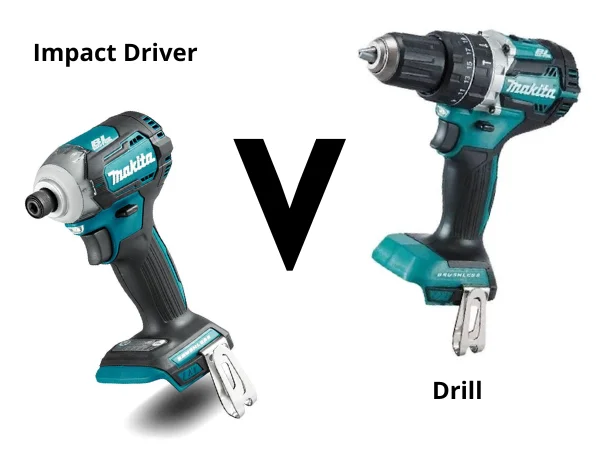
- Power delivery: Drills give steady torque. Impact drivers add pulsing blows for extra turning force.
- Bit type: Drills use chucks. Impact drivers use ¼” hex bits for quick swaps.
- Best use: Drills excel at holes. Impact drivers shine at driving screws and bolts.
- User fatigue: Impact action reduces kickback, which helps on long runs.
Our Pick for Top-rated brushless impact driver for professional use
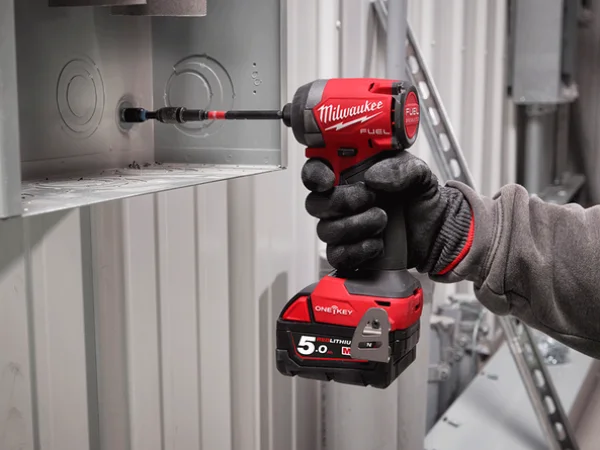
Milwaukee M18 FUEL impact driver
Why we choose this brand
Milwaukee’s trade platform is huge, the tools are tough and the electronics are well tuned. Staying on M18 lets pros add nailers, grinders and lights without changing batteries.
Key features
- Brushless motor with smart thermal and overload protection
- Four-mode drive control with a self-tapper setting
- Fine trigger response for delicate starts
- Compact head, one-hand bit insertion and strong work light
- Broad M18 battery ecosystem, from compact to high-output packs
Pros
- Serious driving power for long coach screws and structural fixings
- Excellent durability and service support in Australia
- Stable bit fit and smooth ramp-up reduce cam-out
- Huge accessory and tool ecosystem on the same batteries
Cons
- Heavier with high-capacity packs
- Premium price bracket
- Louder under load than some compact rivals
Best for
Heavy framing, decking, bugle batten screws, site users invested in the M18 range.
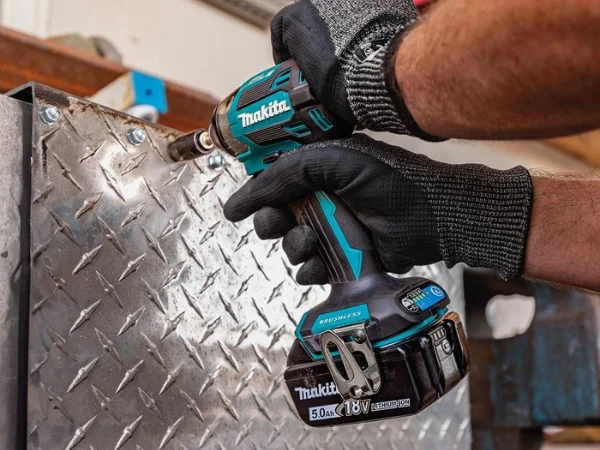
Makita XDT16/TD00004G
Why we choose this brand
Makita leads on ergonomics and precision control. If you value compact size and refined modes for cabinetry and fit-off work, this is a standout.
Key features
- Brushless motor with four speeds plus Quick-Shift and Assist modes
- Two mode buttons near the collet for on-the-fly changes
- Very compact body for tight spaces
- One-touch bit change, electric brake and strong LED
- XPT sealing to resist dust and moisture
Pros
- Superb balance and light weight for all-day use
- Market-leading control over small fasteners
- Quiet, smooth impacts reduce user fatigue
- Excellent bit retention and start control
Cons
- Not the highest raw torque in this group
- Front mode buttons can be bumped with thick gloves
- Platform split (18V vs 40V) can confuse new buyers
Best for
Cabinetry, interior fit-offs, stainless self-tappers, precision work where over-driving is risky.
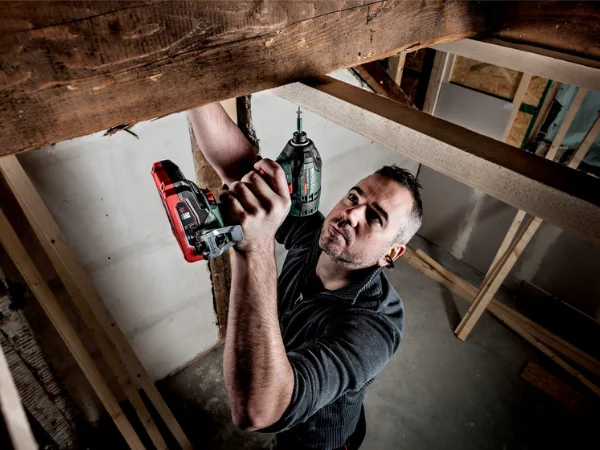
Metabo SSD 18 LTX 200 BL
Why we choose this brand
Metabo’s engineering is robust, and their LiHD batteries run cool under sustained loads. It’s a reliable choice for tradies who prize longevity.
Key features
- Brushless motor and metal gearbox for durability
- Selectable speed/torque levels for controlled driving
- Assist function for self-tapping screws
- Solid ¼” hex anvil, belt hook and bright light
- Compatible with LiHD high-performance batteries
Pros
- Smooth, controlled delivery that protects fasteners
- Stays cooler on long runs with LiHD packs
- Sturdy build that copes with site abuse
- Balanced performance for mixed-trade use
Cons
- User interface is less intuitive than Makita’s
- Can feel rear-heavy with largest batteries
- Fewer locally available accessories compared with Milwaukee
Best for
General construction, metal framing, tradies who value tool life and cool running.
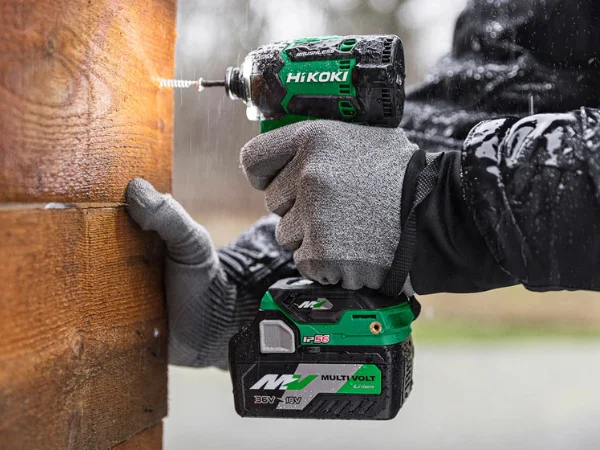
HiKOKI WH36DC 36V MultiVolt Triple Hammer
Why we choose this brand
The triple-hammer mechanism is fast and smooth with less kickback. MultiVolt flexibility suits crews who want compact 18V size with 36V punch.
Key features
- Triple-hammer impact system for rapid fastening and lower vibration
- MultiVolt tech: runs on 36V packs and compatible 18V packs
- Multiple speeds plus assist modes for starting and auto-stop
- IP-rated sealing for dust and water resistance
- Compact head and strong work light
Pros
- Very quick driving in roofing and decking
- Noticeably low torque twist at the wrist
- Sealed design handles outdoor conditions well
- Flexible battery options within the HiKOKI platform
Cons
- High-pitched sound can be sharp in enclosed areas
- Batteries/chargers are brand-specific; little cross-compatibility
- Sits at a premium price point
Best for
Roofing crews, deck builders, and anyone chasing maximum speed with low kickback.
At-a-glance comparison grid: Brushless impact drivers
| Model | Primary use cases | Weight class* | Control modes | Platform notes |
|---|---|---|---|---|
| Milwaukee M18 FUEL | Framing, decking, structural screws, long coach screws | Mid–Heavy | 4-mode drive control incl. self-tapper; refined trigger | Large trade ecosystem on M18; easy to expand across site tools |
| Makita XDT16 (TD00004G) | Cabinetry, fit-offs, stainless self-tappers, tight spaces | Light–Mid | 4 speeds, Quick-Shift/Assist modes; front mode buttons | Excellent ergonomics; pick one Makita voltage family to simplify batteries |
| Metabo SSD 18 LTX 200 BL | General construction, metal framing, mixed trade tasks | Mid | Selectable speed/torque levels; assist for self-tappers | Robust build and cool-running LiHD batteries; steady long-life performer |
| HiKOKI WH36DC Triple Hammer | Roofing, decking lines, rapid production runs, overhead work | Mid | Multiple speeds plus assist; triple-hammer for smoother hits | MultiVolt flexibility (18V/36V compatibility) within HiKOKI platform; low kickback |
*Weight class reflects in-hand feel with common batteries attached, not exact grams.
How to choose between them (quick guide)
- Want the biggest ecosystem and site-tough build? Go Milwaukee M18 FUEL.
- Need compact precision and elite control? Pick Makita XDT16.
- Value cool running and long life? Choose Metabo SSD 18 LTX 200 BL.
- Chasing the fastest driving with less kickback? Try HiKOKI WH36DC Triple Hammer.
Choose with confidence at Geographe Timber & Hardware, your local hardware speclist.
Ready to handle the tools in person? Visit Geographe Timber & Hardware to compare brushless impact drivers, ask questions and pick the right batteries for your kit.
Check out our latest deals, in our catalogue or click here for directions to our shop on Gale Street, Busselton
Bonus Tip: Using a brushless impact driver like a pro (step-by-step)
- Mark and pre-drill when needed, especially in dense hardwoods.
- Choose quality bits and seat them fully in the anvil.
- Start slow, then build speed as the screw bites.
- Let the impacts work. Do not lean your body weight on the tool.
- Use assist modes to avoid snapping or over-driving.
- Stop as the head seats. Check flush, proud or countersunk as required.
- Maintain daily: Blow out dust, check the anvil and store batteries in a cool, dry place.
FAQ’s about brushless impact drivers
What is a brushless impact driver for?
Driving screws and bolts quickly with high, pulsing torque. The brushless motor uses electronics instead of carbon brushes, so it runs cooler, lasts longer and gives better battery life.
What is the difference between brushless and brushed impact drivers?
Brushless drivers adjust power to the load and have fewer wear parts. They are more efficient, need less maintenance and usually outlast brushed models. Brushed tools cost less up front but wear faster due to brush and commutator contact.
Which is the best impact driver in the market?
“Best” depends on your jobs and battery platform. In store, we rate four standouts for pros: Milwaukee M18 FUEL (ecosystem and toughness), Makita XDT16 (compact control), Metabo SSD 18 LTX 200 BL (cool running and longevity) and HiKOKI WH36DC Triple Hammer (speed with low kickback).
Why use an impact driver instead of a drill?
Impact drivers deliver higher turning force with less wrist twist. They excel at long screws, coach screws and self-tappers. Drills are better for drilling holes and tasks that need a chuck.
How do I choose the right model?
- List your common fixings and materials.
- Match torque and speed to the largest fixing you use.
- Check assist modes (start, self-tapper, auto-stop).
- Test balance with the batteries you’ll run.
- Stick to one battery platform for value and convenience.
Can an impact driver drill holes?
Yes, with hex-shank drill bits in timber and thin metals. For clean, accurate holes—especially in masonry or large diameters—use the correct drill (hammer drill or rotary hammer).
What torque do I need?
As a guide: cabinetry and light fit-offs need lower settings; decking and roofing need mid-range; structural coach screws need higher torque. Choose a driver with modes that cover your biggest fixing plus headroom.
Do I need to pre-drill?
Often, yes. Pre-drill dense hardwoods, large coach screws and materials prone to splitting. It speeds work and reduces broken or stripped fasteners.
Which bits should I use?
Quality ¼″ hex impact-rated bits. Match the bit to the screw head (PH, PZ, T, hex). Seat the bit fully, replace worn tips and use nutsetter sleeves for roofing screws.
How do I look after my impact driver and batteries?
Blow out dust, check the anvil for wear and keep batteries cool and dry. Rotate packs through a smart charger and avoid deep discharges. Inspect bits and fasteners daily to prevent cam-out and damage.
Tip: Bring your driver in for a quick check if you notice excessive wobble, heat or reduced run time.
Do not take our word for it.
This is what people say about Geographe Timber & Hardware